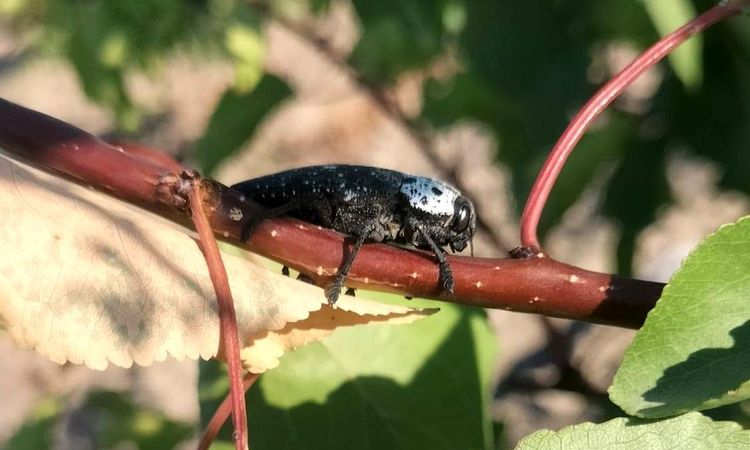
The Salihli District Directorate of Agriculture and Forestry in Manisa issued an important warning closely concerning cherry, plum, apricot, almond, and peach producers. It was announced that the control period has begun against the pest commonly known as "Sapling Root Borer," which can cause significant damage in fruit orchards.
In a statement made by officials, it was noted that the pest, scientifically named Capnodis spp., can cause significant yield losses, especially in stone fruit species. It was emphasized that it is crucial for producers to carry out the necessary control measures against the adult stage of the pest in a timely manner.
Although named "Sapling Root Borer," it was stated that the pest is effective not only in young saplings but also in mature fruit trees. The pest, also known as "tree root borer" in some regions, can sometimes be confused with the larvae of cockchafers and June beetles.
Experts state that most of the damage occurs during the larval stage of the insect. Larvae living underground feed on the roots and root collar area of trees, preventing the plant from absorbing water and nutrients. This situation can, over time, lead to serious problems in trees, ranging from yellowing and stunted growth to complete drying out.
It was stated that the Sapling Root Borer causes damage in many fruit species, primarily cherry, apricot, plum, peach, and almond, and that depending on climatic conditions, the larvae become active in spring and continue feeding until autumn.
The Salihli District Directorate of Agriculture and Forestry advised producers to carry out regular inspections in their orchards and not to neglect control measures targeting the adult stage of the pest. Officials stated that timely intervention would both protect the health of the trees and prevent yield losses. - MANISA