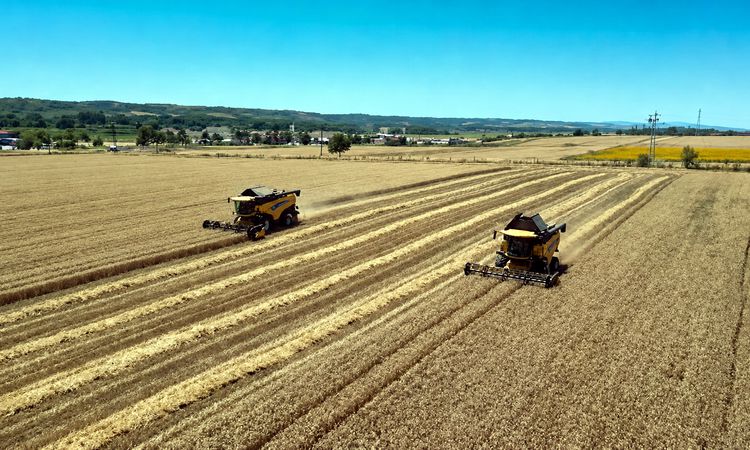
In EDIRNE, the producer, who has experienced loss of productivity in wheat due to the drought caused by climate change for the last 2 years, has smiled at the harvest this year with timely rains. Şafak Kırbiç, President of the Trakya Oilseeds Sales Cooperatives Association (Trakya Birlik), stated that the harvest in the region has reached 95 percent and said, "The wheat harvest will end in the coming days. Yields are good everywhere in Edirne and its districts, as well as in Thrace. I believe that the Thrace average for wheat will be in the 500-550 kilo band."
Increasing temperatures and rainless weather due to climate change have brought drought in Thrace for the last 2 years, causing productivity losses especially in agriculture. While producers in the region planted their wheat in dry soil in the autumn, they received less than expected yields during the harvest period. From last October to March, an average of 450 kilograms of precipitation per square meter fell in the region. Meriç and Tunca rivers, which are used for agricultural irrigation in the region, overflowed in March as a result of rainfall and Bulgaria's water release from dams. During this period, the occupancy rate of the dams in the region increased with the rains. The wheat producer, who was hopeful with the timely rains, smiled at the harvest.
'THRACIA AVERAGE WILL BE BETWEEN 500-550 KILOS'
Thrace Union President Şafak Kırbiç said that with the timely rainfall this year, they received good yield news in wheat, which is still in the harvest period. Kırbiç said, "Wheat harvest has reached approximately 90-95 percent in our region. Wheat harvest will end in the coming days. Yields are good everywhere in Edirne and its districts, as well as in Thrace. Of course, we hear very high yields, but they are local yields. That is, the yields that can be obtained in some parcels. But when we look at other years, wheat yields are at a good level. I believe that the Thrace average wheat yield will be in the band between 500-550. Of course. "There are those that are higher, but there are also those that are lower. The averages will vary depending on the regional soil structure and the amount of rainfall. Our opinion will be in that direction."
'THE TABLE OF PREVIOUS YEARS WILL NOT OCCUR IN SUNFLOWER'
Stating that the rains will also have a positive impact on the yield of sunflowers, which are still developing, Kırbiç said, "These rainfall rates and the good rains we receive in the winter will also have an effect on the sunflower yield. In other years, planting was done earlier in the winter in our region. This year, there was a small amount of sagging due to the rains. But right now, sunflowers have not received serious rainfall for a while, but the plant is managing with the previous accumulations. When we look at the weather forecast, there will be a rainy period again in the coming days. For now, it is at a better level than other years. That is, as in previous years. "I hope there will be a productive year for sunflower. It may not be right to give a rate today, but we can say that it will be above last year's rates. Will it be very high? It depends on the rainfall in the coming days," he said.