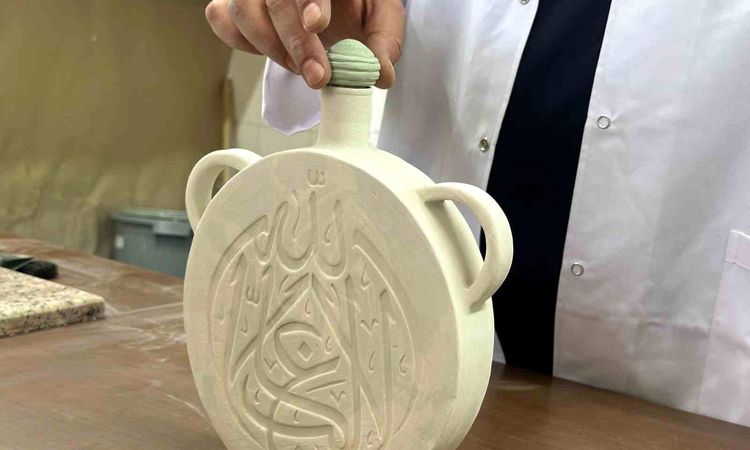
Master Instructor Necdet Yanıkoğlu, who works in the ceramics workshop within the Eskişehir Maturation Institute, stated that it takes a meticulous process of approximately one week for the ceramic works, which are shaped by hand workmanship and come to life with traditional techniques, to complete the maturation stages and take their final form.
Ceramic art, a traditional craft whose roots date back thousands of years, is kept alive in its original form at the Eskişehir Maturation Institute. In the ceramics workshop within the institute, project-based and thematic productions are mainly carried out. Extensive activities are carried out in the workshop within the scope of the Sheikh Edebali Project, which gained momentum after UNESCO included 2026 in the celebration and commemoration program in memory of the 700th anniversary of Sheikh Edebali's death.
"We produce with traditional techniques, staying true to the essence of the craft."
Providing information about the artistic activities carried out in the workshop, Master Instructor Necdet Yanıkoğlu explained the laborious production process of ceramics. Stating that the firing and drying phases of ceramics, which are shaped entirely by hand, take at least a week, Yanıkoğlu said, "In our ceramics workshop, we generally work project-oriented in order to preserve the integrity of the collection. For example, we are currently focusing on our Şeyh Edebali project, we are producing thematic works for it. In addition, we have exhibition activities consisting of original designs and joint projects we carry out with other workshops. The ceramic clay, which we shape entirely by hand, is first baked into biscuits at approximately 950 degrees after the natural drying process." Then, we move on to the glazing process, which gives the work aesthetics and strength. Our glazed ceramics are fired for the second time at 150 degrees and the special ceramic glazes we use are applied after the first firing, creating a glassy, protective and shiny texture on the surface of the work. The process of drying the clay using natural methods takes time; for this reason, it takes an average of one week to complete a work, remaining true to the essence of the craft. "We rely on distant, completely traditional and deep-rooted methods," he said. - ESKİŞEHİR