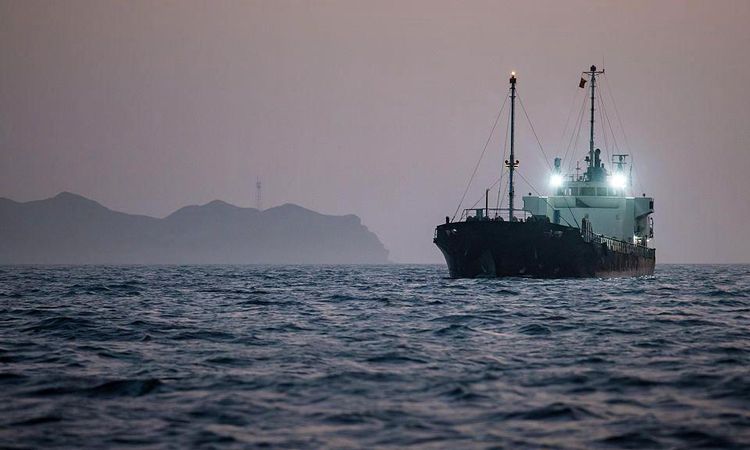
The United Arab Emirates (UAE) announced that one Indian crew member was killed and eight others were injured as a result of Iran's cruise missile attacks on two oil tankers in the Strait of Hormuz.
India's Ministry of External Affairs confirmed that an Indian sailor was killed in Iranian attacks.
It was announced that 10 Indian crew members were injured on the hit UAE-flagged ships.
Indian Foreign Affairs also announced that Deputy Iranian Ambassador Muhammad Javad Husseini was summoned to the ministry.
According to the UAE, the attack took place while the tankers were in Omani territorial waters.
Abu Dhabi National Oil Company announced that two large oil tankers were hit and "severely damaged".
UAE officials announced that six of the injured were Indian citizens and two were Ukrainian citizens.
It is reported that the condition of four of the injured is serious.
The UAE Ministry of Defense announced that flames broke out in both oil tankers following the explosions, but the flames were brought under control.
Iran's Revolutionary Guard announced that two tankers that "violated the rules" were "shot and neutralized."
The reasons given were that the ships turned off their navigation systems, passed through an area with mines, and left warning calls unanswered.
Iran accused the United States of "encouraging ships to use an illegal route."
US President Donald Trump announced that they will restore the blockade to the Strait of Hormuz on July 13.
Trump also imposed a "fee to keep the Gulf open" worth 20% of the cargo carried by all ships passing through the Gulf.
Iran responded to this by stating that the United States could have no role in the Gulf.
The tension in the Gulf, which fell after the signing of the temporary ceasefire agreement between the USA and Iran, has increased again with mutual attacks in the last week.
Before the US and Israel began attacking Iran on February 28, 20% of global oil and gas traffic passed through the Strait of Hormuz.
Subsequently, Iran closed the strait to passage, which led to an increase in energy prices and global inflation.
After lengthy negotiations, the United States and Iran signed a ceasefire in June.
The ceasefire also included a timeline for the two countries to negotiate many issues, including Iran's nuclear program, to reach a permanent agreement.
However, it is not known how the resumption of hostilities will affect the negotiations.
BBC's defense news correspondent Chris Partridge pointed out that the latest attacks once again reveal Tehran's capacity to launch attacks.