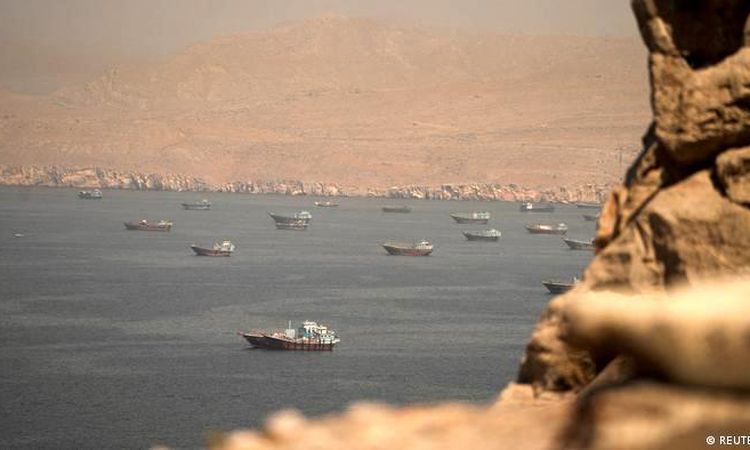
The US military's night attacks against Iran continued for the fourth day in a row. Iran also retaliated against these attacks. The USA also reactivated the blockade of the Strait of Hormuz. The US army, which continued its attacks on targets in Iran for the fourth night in a row, also restarted the naval blockade of Iranian ports. In retaliation, Iran targeted US bases in Kuwait, Jordan and Bahrain.
In the statement made on the US Central Command (CENTCOM)
CENTCOM Commander Brad Cooper also claimed that Tehran "deliberately attacked civilians" and stated that there were dead, injured and missing people in the Iranian attacks on seven merchant ships last week.
Meanwhile, the US military has resumed the naval blockade of Iranian ports as previously announced. According to the statement made by CENTCOM, the blockade started at 23:00 Turkish time on Tuesday.
In the relevant statement, it was stated that currently "more than 20 warships and hundreds of military aircraft of the US Navy are deployed throughout the Middle East" and that the American armed forces are "alert, strong and ready".
US President Donald Trump threatened that if Iran does not accept a deal by the end of next week, he will order attacks on power plants and bridges in this country.
Speaking to the television channel Fox News, Trump said, "Next week things are going to get really bad for them, because next week it will be the power plants' turn. Next week it will be the bridges' turn." Trump also said regarding the Tehran administration, "Unless they sit at the table and negotiate, we will disable all their power plants. We will disable all their bridges."
On the other hand, Trump backed down from the idea of charging a transit fee of 20 percent of the product carried by tankers and cargo ships passing through the Strait of Hormuz. Stating that the leaders of the Gulf countries called him and promised to invest a large amount in the USA, Trump announced that he wanted to obtain toll revenue through trade agreements with these countries.
The USA and Iran signed a framework agreement in mid-June, under the mediation of Pakistan, aiming to pave the way for a peace agreement within 60 days. One of the articles of the agreement was about ensuring "safe and free passage" through the Strait of Hormuz. With the agreement in question, more ships were allowed to pass through the Bosphorus, but later attacks on cargo ships occurred, for which the USA blamed Iran.
Iran effectively closed the Strait of Hormuz, which is extremely important for global oil and liquefied natural gas trade, following the attacks by the USA and Israel that started at the end of last February, and this caused global energy prices to increase astronomically.
In a statement on Tuesday, Iranian Deputy Foreign Minister Qassim Gharibabadi accused Washington of "disrupting" the framework agreement negotiated between the two countries by re-initiating the naval blockade.
Iran's Revolutionary Guard announced that the Strait of Hormuz would remain closed "until the United States ends its aggression." Iran has targeted many US bases in the Gulf countries in response to recent US airstrikes. According to Iranian state television Irib, the army announced that it hit the hangars used by the US military at Al Ezraq Air Base in Jordan on Wednesday morning with UAVs.
The Revolutionary Guard also reported that cruise missiles were launched at a US army logistics center in Kuwait; It also announced an attack on facilities belonging to the US Navy's fifth fleet in Bahrain, including a command center, warehouses and fuel depots.