An investigation has been launched in Pakistan into a network suspected of producing anti-aging injections by smuggling human placentas from hospitals.
The Federal Investigation Agency (FIA) accuses the gang in question of purchasing 200 kg of placentas from various hospitals every month.
In a statement to BBC News Urdu, FIA stated that the placentas were sent abroad after being dried and processed.
In a raid in the capital Islamabad late last month, authorities seized 500kg of what was thought to be human placenta from an illegal processing plant and five people were sent to prison.
In the photos shared by the FIA, trays of dried placentas can be seen placed on wheelbarrows inside a house that has been "converted into a placenta storage and processing facility".
Hina Kanwal of the Human Organ Transplantation Organization of Pakistan told BBC News Urdu that the five suspects paid approximately $2.90 per placenta to hospitals in Islamabad and Rawalpindi, which would have been impossible without the cooperation of hospital administrators.
According to the FIA's statement, these substances would be exported and turned into anti-aging injections and sold for approximately $2,530 each.
Kanwal says there is great demand for human placentas in plastic surgery, but buying and selling this temporary organ is illegal in Pakistan.
Those found guilty of harvesting human organs for commercial purposes can be sentenced to up to 10 years in prison and a fine of up to $3,600.
FIA says the network's operations have spread to other major cities, including Lahore and Peshawar.
Investigations are also being carried out against immigration officials, waste management companies and hospitals for possible complicity.
An official told BBC News Urdu that the FIA had previously "taken action against illegal human organ transplants" but this was the first case involving "an organised, international network trading in human placentas".
Authorities stated that the five suspects first claimed that the substance in question was sheep placenta, but during subsequent interrogations they admitted that it was human placenta.
On the other hand, FIA officials at Islamabad International Airport seized 100 kg of human placenta that was about to be sent to Vietnam. Although the use of animal placenta is allowed in Vietnam, the use of human placenta is prohibited.
The number of people detained by the FIA on suspicion of human placenta trafficking has increased to nine.
Sadaf Tariq, a gynecologist in Pakistan, emphasizes that there are strict regulations regarding the disposal of placenta, which is considered "highly infectious medical waste".
Speaking to BBC News Urdu, Tariq said that the placenta was set aside immediately after birth, and was placed in a yellow "biohazardous waste" bag, which stated that it contained the placenta, and was tightly closed.
“These are transported from the delivery room or operating room to the hospital's central cooling store to prevent the placenta from rotting and smelling bad.”
Tarık adds that the placenta can be stored for a maximum of 24 hours.
"From now on, all pathological waste, such as placenta, is destroyed through incineration, which is the standard medical procedure. Whether it is a public or private hospital, the same method is used."
Tarık says that government-approved waste management companies do this work, and that when hospitals give this material to waste management companies, a regular record is kept and these records are regularly checked by the authorities.
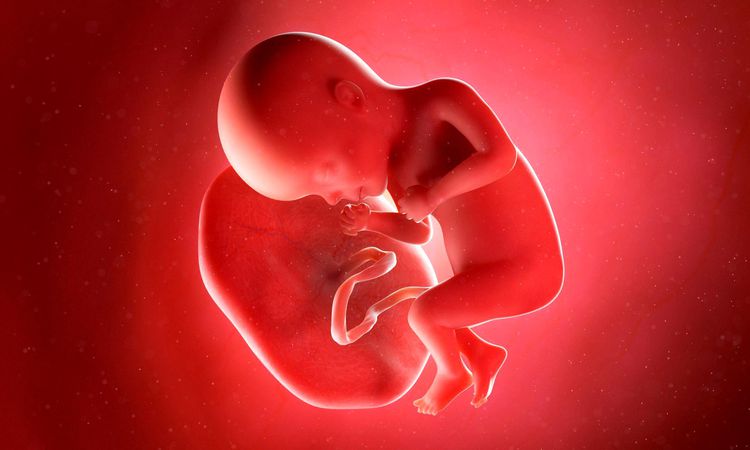
The placenta is a temporary organ that develops in the uterus during pregnancy and continues the life of the baby inside the uterus.
The placenta, which is connected to the baby through the umbilical cord, carries the necessary oxygen and nutrients to the baby and also throws out waste materials.
In normal birth, the placenta is expelled from the birth canal by the body shortly after the baby is born. In cesarean birth, doctors surgically remove the placenta.
However, some people believe that the placenta, which is rich in protein, iron and fat, is also nutritious for adults.
Placenta extracts have been used in traditional medicine in many cultures for centuries.
The annual legal trade in placentas is now worth more than $700 million globally, and is expected to rise to more than $1.4 billion by 2034, according to US-based market research firm Polaris.
Polaris states that this growth is due to increased demand for porcine, sheep, horse and human placenta extracts.
“The placenta has become the star of not only pregnancy but also medicine and science,” says Nitin Tambe, analyst at Polaris.
“From feeding babies to medical treatments to inspiring innovations in the beauty industry, its potential for use is ever-growing.”
Considering that the primary purpose of the placenta is to sustain life in the earliest stages of life, ironically many of the products derived from these extracts are used for conditions associated with aging.
Areas of use include:
However, placentas, which contain high amounts of female hormones such as estrogen and progesterone, are used in many medications, including the treatment of postpartum depression.
It can also be used in the treatment of autoimmune and neurological disorders such as stroke, chronic fatigue, Parkinson's disease, multiple sclerosis (MS), muscular dystrophy, liver diseases, Crohn's disease and even cancer, where traditional treatments have limited success.
“Research also shows it is useful in medications aimed at increasing iron levels and treating postpartum anemia,” says Tarik.
In addition, according to some, its pill and injection forms help tissue regeneration.
Tarık says, "Especially the inner layer of the placenta is known for its growth factor properties. It is also used in the treatment of surgical procedures such as deep wounds, serious burns, ulcers and eye injuries."
However, the scientific evidence behind these practices and regulations around the world vary.
Japan Bio Products (JBP) is a company that exports 100% powdered placenta capsules as a dietary supplement throughout Asia. Some of these products are derived from human placenta, while others are derived from pig or horse placenta, depending on the local market.
Speaking to the NutraIngredients news site, Winston Ooi, JBP's director of the Association of Southeast Asian Nations, says, "Asians tend to be more open-minded towards placenta-based products. In fact, consuming placenta is a practice in the past of the Chinese."
“With more information available online, people are becoming more exposed to products containing placenta and demand is increasing.”
In China, despite the ban on its commercial sale, fresh human placenta continues to be sold "under the counter" or disguised under different names on various online platforms.
A single human placenta can sell for more than $50, an online seller told the Global Times newspaper.
"If you buy more, I can reduce the price [to $40]. We buy the raw material per kilogram [to $30]."
Lawyer Zhang Bo also told the paper that those caught are often fined less than five times their illicit earnings; "If the fine were increased to, say, 50 times the amount of illicit gains, criminals might think twice about the cost of their crime," he added.
"In ancient traditional Chinese medicine, human placenta was mainly used to strengthen immunity or treat asthma and bronchitis," Yao, a traditional Chinese medicine pharmacist at a public hospital in China's Hunan province, told the Global Times newspaper.
However, gynecologist Dr. from Shanghai People's Hospital. Huang Chengsheng also warned the Global Times that these infections can be acquired through eating "unhygienic placentas" that can carry viruses such as HIV, hepatitis B and syphilis.
Dr. However, Huang notes that "many new mothers prefer to take their placenta home and eat it rather than have it destroyed."
One new mother told the Global Times that both her mother and mother-in-law asked if they could eat her placenta. "I don't want them to," she said. "This is disgusting."
Another woman in Shanghai told the newspaper that she paid about $7 at a shop near the hospital to pulverize her placenta and put it into capsules, adding, "This was for my father-in-law, who is in poor health."
Another woman who runs a door-to-door placenta delivery service in China's eastern Zhejiang province told the newspaper that her business had been affected by online advertising restrictions, but "real demand is still strong."
We used artificial intelligence in the translation of this article, which was originally written in English. A BBC journalist checked the translation before publication. .