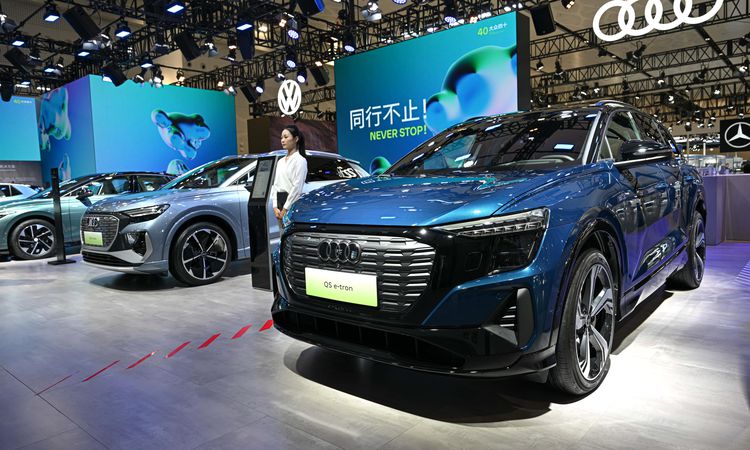
HAIKOU, July 14 (Xinhua) -- China's southern island province of Hainan aims to ban the sale of internal combustion engine vehicles by 2030, leading the transition to new energy vehicles.
According to the province's plan to establish a national ecological civilization promotion zone covering the period 2026-2030, all private vehicles that will be new or renewed in Hainan by 2030, as well as all vehicles purchased for public services and commercial activities, will need to be new energy. Vehicles specifically designed for certain tasks will be excluded from this application.
According to the recently published plan, the share of new energy vehicles in the total vehicle fleet in Hainan is expected to increase from 23.75 percent in 2025 to 45 percent by 2030. The state will also develop its charging infrastructure network to provide at least 1 charging point for every 2.5 new energy vehicles.
Hainan first proposed the goal of banning the sale of fossil fuel vehicles by 2030 in 2018, becoming the first province-level region in China to announce such a target. The latest plan reaffirmed that the province is moving determinedly towards this goal.
The plan is considered on online platforms as the most up-to-date evidence of China's commitment to carbon reduction and new energy vehicles at a time when the Western world is stepping back from green policies. The European Commission's announcement late last year of its plan to relax the regulation that effectively bans the sale of new vehicles with internal combustion engines from 2035 is seen as a significant step back in this field.
Hainan Department of Industry and Information Technology stated that as of October 2025, the share of new energy vehicles in newly registered vehicles in the province reached 67.14 percent, so that two out of every three new vehicles are new energy. In the last five years, Hainan ranked first in the country in terms of market share of new energy vehicles and second in terms of its share in the total number of vehicles.
China had set ambitious targets for 2035 within the scope of the new Nationally Determined Contributions announced last September. These targets include reducing economywide net greenhouse gas emissions by 7 to 10 percent compared to peak levels, increasing the share of non-fossil fuels in total energy consumption to more than 30 percent, and increasing installed wind and solar power capacity to more than six times the 2020 level.