China is now viewed more favorably than the United States in many countries around the world, according to a new Pew Research Center study. This is the first time such a result has been reached in the research of a US-based organization.
According to the results of this year's research, positive opinions towards China are at a record level in some countries, including Türkiye.
The findings of the US-based impartial think tank show that positive views towards China have reached record levels in many countries, while the perception towards the US has worsened.
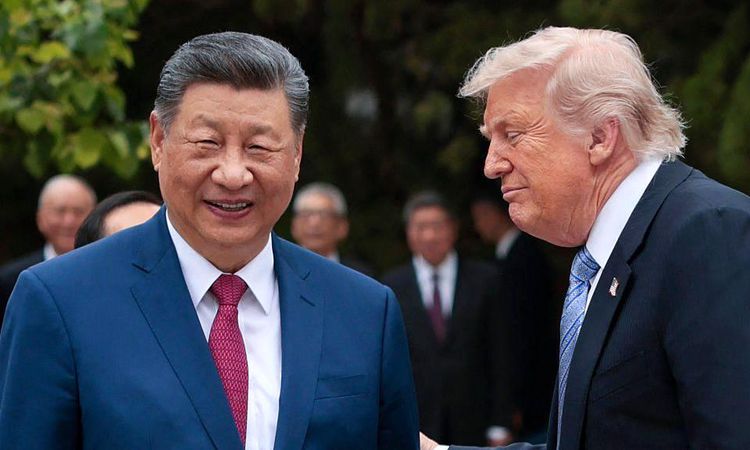
In general, participants expressed low confidence in both US President Donald Trump and Chinese leader Xi Jinping. However, Xi scored higher than Trump.
While participants thought that the United States respected personal freedoms more than China, it was revealed that China intervened less in the affairs of other countries than the United States.
More than 42 thousand people from 36 countries participated in Pew's survey between February and May.
Participants chose one of the following responses: "very positive, somewhat positive, somewhat negative, or very negative" for their views on each superpower.
The research center found that in 25 of 36 countries, the number of people who have a positive view of China is higher than those who have a positive view of the United States.
According to Jonathan Schulman, one of the researchers at the center, which has been following global trends towards superpowers since 2002, positive views towards China instead of the USA were seen for the first time in so many countries.
Pew has previously observed declines in positive views towards the United States. These declines were seen at the end of George Bush's administration in 2008 and at the beginning of Trump's first term in 2017.
Even then, positive views of China were generally at the same level or slightly lower, Schulman told the BBC.
Spain, Indonesia, Italy, Greece and Canada are among the countries where the view towards China is most positive.
There are only six countries that remain more supportive of the United States in this year's survey, and most of them are staunch U.S. allies: Poland, the Philippines, South Korea, India, Japan and Israel.
On the other hand, the center found that in 20 countries, the median value of positive views towards the United States has decreased steadily in recent years, while the median value of positive views towards China has increased.
The researchers also found, based on an expanded data set that included the United States, that positive views of China have increased in more than a third of the countries studied in recent years.
In surveys conducted this year, positive views towards China reached record levels in some countries such as Italy, Spain, Colombia, Mexico, Indonesia, Malaysia, Nigeria and Turkey.
Researchers found that, in general, middle-income countries have positive views of China, while wealthier countries have more negative views.
An exception to this pattern was Singapore, which had the highest GDP per capita among the countries studied and a highly positive attitude towards China.
According to the survey, the most positive and most negative views towards China came from the Asia-Pacific region. Nearly 90% of Pakistanis support China, while only 11% of Japanese do.
The survey also asked respondents whether they trust Xi and Trump to take the right action in world situations.
Overall, levels of trust in both leaders were low, with most scores below 50%. But most countries surveyed tend to have more trust in Xi rather than Trump.
The highest and lowest scores given to Xi in the survey came from Pakistan and Japan, with 83% and 7% respectively.
The highest vote rate for Trump came from the Philippines with 68%, and the lowest vote rate from the West Bank/East Jerusalem with 4%.
Schulman said that their research generally revealed that "people do not have a very strong opinion about Xi compared to other leaders."
About Trump, people "tend to make more and more extreme comments."
The survey also found that while the number of people who believe the U.S. government respects its citizens' civil liberties more than China is still high, the gap is narrowing.
Pew asked additional questions in several middle-income countries to learn about views on the superpowers' foreign policies.
An average of 75% of survey respondents thought the United States intervened too much or moderately in other countries' affairs, while 45% said the same about China.
Other institutions have conducted similar research in recent years.
China surpassed the United States in global approval ratings last year, according to a study by public opinion research company Gallup. The biggest difference in favor of China in the last 20 years was reported.
But US-based think tank Asia Society's annual Global Opinion Survey on China found that China's image, which had plummeted during the pandemic, has shown only a partial recovery since then.
Chong Ja Ian, a visiting scholar at Carnegie China, said Pew's latest results are not surprising:
"The instability of US policy, the use of force and the resulting economic damage have made many people uneasy."
Pew's investigation began shortly after Trump intensified his rhetoric about annexing Greenland and the U.S. captured Venezuelan leader Nicolas Maduro.
While the survey was continuing, the US's war with Iran began.
Dr. "Whether China is popular or not is certainly a debatable question, but right now China seems more predictable. Beijing is working hard to polish its image, especially in struggling countries," Chong added.
Citing the discrepancy between high positive opinion scores towards China and relatively low trust in Xi, Dr. Chong said that just because China is "more predictable and therefore makes some people feel more comfortable, that doesn't change the fact that Xi is a major authoritarian figure."
He noted that under Xi's leadership, China "has made more assertive and expansionist demands, including greater insistence on other countries to conform to its own understanding of the world view" and emphasized that questions remain about the treatment of minorities in the country:
“I think people attribute the more repressive and less economically beneficial policies to Xi personally, but they associate the more positive elements, such as technological advances, with China in general.”
We used artificial intelligence in the translation of this article, which was originally written in English. A BBC journalist checked the translation before publication. .