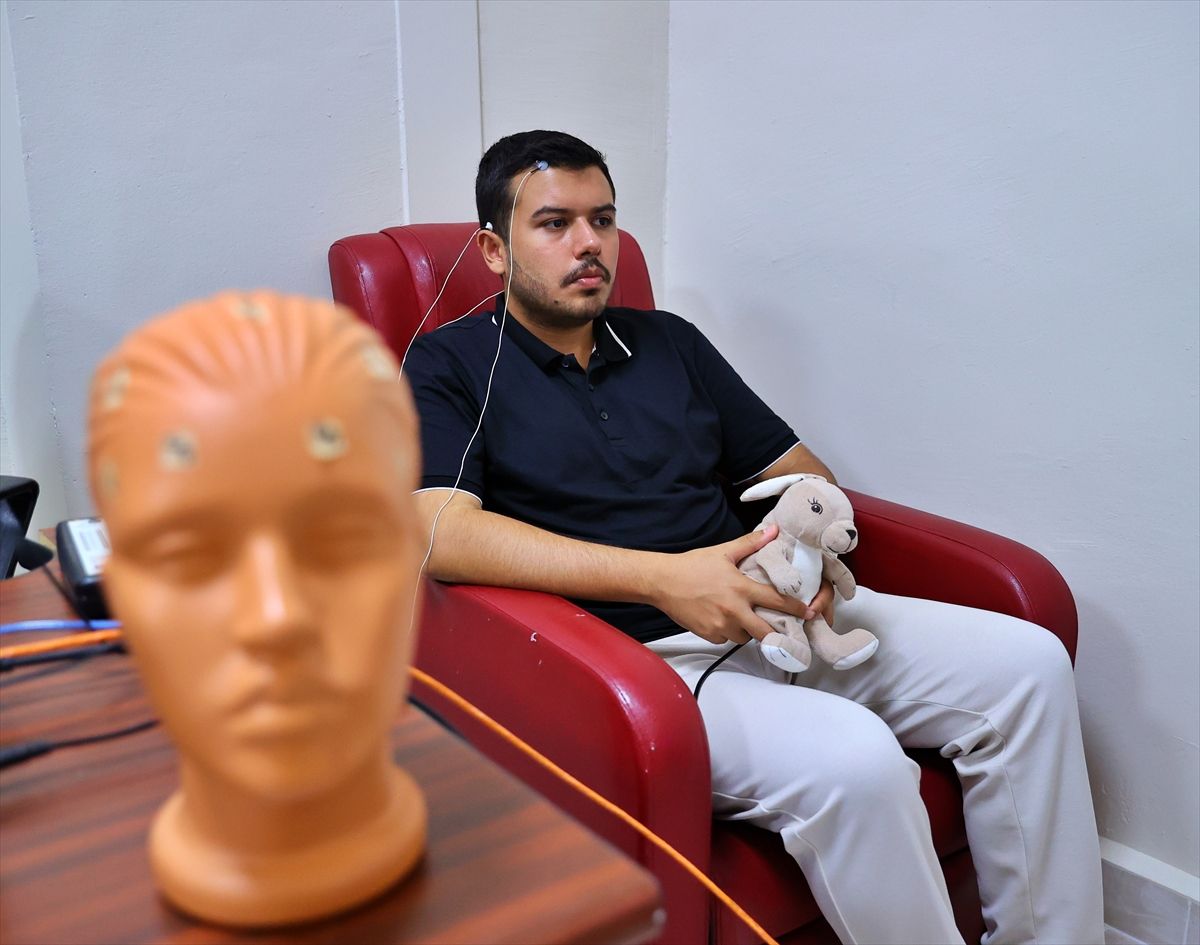
At Ondokuz Mayıs University (OMU), activities are being carried out to develop "digital twin" technology that will provide personalized diagnosis and treatment in the diagnosis and treatment of neurological diseases.
OMU Faculty of Medicine, Head of Department of Neurology and President of the Turkish Neurology Association, Prof. Dr. The multidisciplinary team, led by Murat Terzi, plans a personalized treatment method through "virtual patient" models created by teaching the patients' Magnetic Resonance (MRI), electroencephalography (Eeg), voice and walking data to artificial intelligence.
Thanks to the "digital twin" method, it is aimed to predict the future course of diseases such as MS, Alzheimer's, Parkinson's disease and epilepsy early, making an accurate diagnosis and minimizing the harm that may occur to the patient.
Prof. Dr. Murat Terzi told the AA correspondent that early diagnosis affects the clinical course in neurological cases, and that they are making more and more use of digital technology and artificial intelligence in early diagnosis and treatment determination.
Stating that they attach great importance to artificial intelligence and digital technology in OMU Department of Neurology and Neurosciences, Terzi said, "We are doing projects related to this. In particular, we teach the patient's existing data, such as MRI and EEG images, which we call 'Digital Twin', to the machine. In the virtual environment, the patient's age, gender, complaints and findings, what is in the brain MRI, EEG, blood or other samples are evaluated like a patient in the virtual environment. Early diagnosis is made on these." "We then plan treatments for the course of the disease." he said.
Emphasizing that they will increase the success level of treatment by minimizing the problem in patients with the "Digital Twin" technology they developed, Terzi said, "At OMU, we carry out many activities especially related to epilepsy, Alzheimer's, MS, Parkinson's and cerebrovascular disease. We record the voice data of the patients. We also analyze the walking videos of the patients. With these findings, we collect the patients' imaging, brain tomography, brain MRI, EEG and electromyographic (EMG) examinations in a database. The data of the patients are collected in a database. "We try to plan both the correct diagnosis and the right treatment in the best possible way by predicting early on how the disease will progress and what may happen in this disease." he said.
Pointing out that these activities are supported by both OMU and sponsor organizations in Türkiye and international platforms, Terzi said:
"We are teaching the clinical MRI, EEG and EMG data of hundreds of patients to the machine. Why is machine teaching important? Because the world is heading towards a period where more robots will roam and there will be more remote interventions, especially in health technology. During this period, we want to teach the most accurate information to the existing robotic devices and help healthcare professionals, especially doctors. In other words, in our daily lives, we can make a better diagnosis with our findings, just like MRI, ultrasound or EEG, EMG devices. With the state of artificial intelligence. "Let the products we produce together help us."
Terzi added that they have been operating the activity for 3 years and continue to improve it.